Why Memory Care Can Give Assurance for Senior Citizens and Families
Business Name: BeeHive Assisted Living Homes of Rio Rancho NM #1 - Dementia Care & Memory Care
Address: 204 Silent Spring Rd NE, Rio Rancho, NM 87124
Phone: (505) 221-6400
BeeHive Assisted Living Homes of Rio Rancho NM #1 - Dementia Care & Memory Care
BeeHive Assisted Living Homes of Rio Rancho NM #1 - Dementia Care & Memory Care is a premier Rio Rancho Assisted Living facilities and the perfect transition from an independent living facility or environment. Our Alzheimer care in Rio Rancho, NM is designed to be smaller to create a more intimate atmosphere and to provide a family feel while our residents experience exceptional quality care. We promote memory care assisted living with caregivers who are here to help. Memory care assisted living is one of the most specialized types of senior living facilities you'll find. Dementia care assisted living in Rio Rancho NM offers catered memory care services, attention and medication management, often in a secure dementia assisted living in Rio Rancho or nursing home setting.
204 Silent Spring Rd NE, Rio Rancho, NM 87124
Business Hours
There is a specific type of worry that features amnesia. It is not only regarding missed out on appointments or repeated tales, although those can be hard enough. It is the slower, much more disturbing inquiry beneath every little thing else: is my loved one secure, is the day ending up being too complicated, and am I doing enough to help?
That question modifications family life. Grown-up kids begin checking phones regularly. Partners quietly handle extra duty than they ever before anticipated. A senior who when took care of whatever with ease may begin withdrawing, really feeling embarrassed by small blunders or frustrated by the loss of freedom. Gradually, every person entailed can feel extended thin.
That is where memory care can make a genuine difference. For several families, the appropriate memory care setup does not feel like "giving up" on a loved one. It seems like lastly getting the support framework that has actually been missing out on. It brings calm to life, uniformity to routines, and skilled like minutes that once created worry or dispute. The assurance comes not from making believe the condition is simple, yet from knowing someone is ready for the difficult parts.
The hidden strain that households carry
When individuals first start looking for memory care near me, they are often trying to find help with a crisis that has actually already been building for months, often years. A parent forgets to turn off the cooktop. A spouse wanders outside and can not discuss where they were going. Someone with dementia obtains dubious when a family member attempts to help with bathing or medications. These are not separated events. They are signs that the house has relocated into a stage where common support might no longer be enough.
The emotional pressure is typically underestimated. Household senior living caretakers do practical work, however they additionally take in anxiety, shame, and despair. They may say with the person they enjoy because they are tired. They might lose rest bothering with drops, drug mistakes, or what occurs if they miss a phone call. Also when they are doing whatever "right," the unpredictability can be relentless.
Memory care eases that concern by sharing it. That alone can transform the ambience in a family members. Rather than continuously scanning for risk, relatives can spend even more time being a daughter, child, spouse, or good friend again.
What memory care really provides
Memory care is a specialized kind of senior care made for people coping with Alzheimer's condition, dementia, or other kinds of cognitive decrease. The very best communities do not merely provide additional supervision. They construct the day around the requirements of individuals whose memory, orientation, judgment, or interaction may shift from hour to hour.
That typically implies safe environments that lower wandering danger, employee learnt dementia communication, structured routines, and activities that support knowledge rather than complication. It additionally suggests aid with showering, dressing, dishes, medicine suggestions, and behavior changes that can be tough for family members to handle alone.
There is a huge difference in between basic elder care and memory care. In some assisted living setups, team might be type and qualified, yet they are not constantly planned for the distinct pacing and repetition that memory loss requires. An individual with dementia might do far better where the environment is calmer, the cues are more clear, and the caregivers know just how to reroute as opposed to correct.
That type of specialized support can be deeply encouraging. Families frequently claim that when they ultimately found memory care, the constant tension in the house softened. Dishes became much less chaotic. Early mornings started extra naturally. There was much less suggesting over whether somebody had actually taken their tablets, secured the door, or eaten breakfast.
Safety issues, however self-respect issues too
It is very easy to discuss memory care in terms of safety alone, since safety is urgent. Straying, drops, missed medicines, inadequate nutrition, and confusion around home appliances are severe worries. A safe and secure environment can protect against a lot of emergencies.
Still, safety is only component of the story. Family members typically postpone a move since they are afraid a loved one will feel trapped or removed of dignity. That concern stands. No person wants a parent to feel like they are being taken care of rather than respected.
Good memory care addresses this by stabilizing protection with choice. Homeowners may pick between meal options, join activities at their own pace, and decorate their spaces with acquainted things that make the space feel personal. Employee find out the resident's behaviors, favorite music, liked names, and convenience rituals. Those details matter greater than lots of people expect. An individual who has problem recalling a lunch conversation might still illuminate when hearing an acquainted track or holding a well-worn image album.
I have seen households amazed by this balance. They walked into a neighborhood expecting an institutional feel and found rather an area where a resident could wander securely, sit near a window, fold towels, or help water plants. Those basic tasks can restore a feeling of purpose that amnesia commonly takes away.
The alleviation of a steady routine
People living with cognitive decline normally do much better with predictability. Acquainted rhythms reduced stress. When dishes, drugs, activities, and bedtime happen at regular times, the day comes to be less confusing. That can lower anxiety, missed actions, and the anxious inquiries that commonly appear when a person really feels lost.
Memory care is built around this idea. Employee understand that shifts issue. A hurried bathroom, a noisy hallway, or a lot of selections at once can produce distress. A thoughtful caretaker slows the rate, utilizes tranquil language, and breaks jobs into smaller pieces. That strategy can avoid troubles before they start.
For households, this consistency is an alleviation due to the fact that it removes the consistent improvisation. In the house, someone might prepare dishes, an additional might manage suggestions, and another person might action in after work. Even with the best purposes, the regular adjustments relying on who is available. In memory care, the environment itself carries the regular. That solidity offers senior citizens a much better possibility to really feel settled and provides family members one less point to coordinate.
When respite care belongs to the picture
Some families are not ready for a long-term relocation, and that is easy to understand. A short keep or short-lived assistance with respite care can be a practical bridge. It gives family caregivers time to remainder, travel, handle surgical procedure, recoup from illness, or merely capture up on sleep without stressing over every detail at home.
Respite care can also aid households check whether a memory care setting feels like the right fit. A short remain supplies a sensible picture of daily life. Does the resident settle after the first day or more? Are staff members patient and observant? Is the environment calm enough? Does the individual appear less nervous after a regular schedule?
That sort of test duration is not a small point. Many family members really feel guilty even considering a break, as if requiring remainder suggests they have failed. It does not. Caregiving without alleviation can end up being hazardous for everybody. A relaxed caretaker makes much better decisions. They talk much more gently. They notice changes earlier. They can remain engaged longer.
Memory care neighborhoods that provide respite care recognize this. They are not simply supplying an area. They are giving breathing room.
What satisfaction looks like in everyday life
Peace of mind appears abstract until you see what it alters. It might suggest a spouse no longer has to awaken 3 times a night to inspect doors and windows. It might imply a grown-up kid can respond to a job email without questioning whether a parent has roamed outside. It might indicate a senior who utilized to become upset by bathroom time currently has assistance from somebody who knows how to approach the job without a power struggle.
The effect is frequently peaceful yet extensive. Family members start to see the lack of situation. They are no longer living from one emergency situation to the next. They can visit and take pleasure in firm instead of getting here in a state of dread. Discussions come to be less regarding logistics and more concerning connection.
That does not suggest the pain goes away. Amnesia still hurts. A move to senior living near me that consists of memory care can bring unhappiness in addition to relief. A household may mourn the home they anticipated their loved one to remain in forever. That psychological intricacy is regular. What changes is the balance. Alleviation begins to exceed fear.
Signs that memory care might be the right following step
Families often wait also long since they are attempting to pin down a solitary ideal moment. In reality, the decision generally originates from a pattern, not one significant occasion. Repetitive wandering, getting worse complication with drugs, frequent drops, aggressive habits, bad hygiene, or a home atmosphere that no more feels manageable can all factor towards the demand for specialized support.
Another indication is caregiver exhaustion. When the individual providing care is ending up being risky as a result of exhaustion, the entire household is at risk. Rest deprivation, anxiety, and continuous caution can take a major toll. In those cases, memory care may not simply be a choice. It may be one of the most liable choice available.
Families in some cases ask whether choosing memory care suggests they waited also long. Usually the much better concern is whether the existing scenario is still working. If the response is no, after that the following action is entitled to attention. Waiting up until there is a major injury or a significant dilemma rarely makes the change easier.
A closer take a look at the human side of elder care
Good elder care is not only about tasks. It is about judgment. It needs knowing when to action in and when to step back, when to reroute and when to comfort. That is especially real in memory care, where locals may not have the ability to discuss pain clearly. A grimace might indicate pain, appetite, overstimulation, or embarrassment. A competent caretaker discovers to review the context.
That type of attentiveness is difficult to keep at home all the time, especially for families stabilizing tasks and other duties. In a memory care neighborhood, it is the daily job. Staff members observe patterns in time. They see exactly how a resident responds to loud rooms, which foods are much easier to eat, and what time of day often tends to bring more confusion. Those monitorings form care in manner ins which are refined but meaningful.
One lady I talked to described the modification in her father as quickly as he moved into memory care. In your home, he had ended up being defensive whenever anyone attempted to aid with clothing or showering. In the neighborhood, he accepted support from personnel without the same stress. The distinction was not that his problem had improved. The distinction was the setting, the tone, and the consistency of the caretakers. He felt less cornered. His family members felt much less sad after every visit.
Choosing a neighborhood with care
Searching for senior living near me can really feel overwhelming since every brochure sounds refined. The genuine task is to look beyond the advertising and pay attention to just how the place really feels. An excellent memory care area ought to appear tranquility without being boring, structured without being rigid, and welcoming without rushing families through the door.
It helps to ask sensible inquiries, but it likewise helps to trust what you observe. Do staff members talk directly to locals, or do they discuss them? Does the environment feel clean and lived in, or clean and sterile and impersonal? Are homeowners participated in real activities, or merely sitting in front of a tv? Exactly how do caretakers respond when someone is upset?
The responses matter since memory care is personal. A household is not choosing a building. They are choosing individuals that will certainly share life with somebody they enjoy. That choice is worthy of patience.
What family members typically feel after the move
The days after a step can be psychologically unpleasant. Alleviation may show up initially, then regret, after that restored fear, after that a softer type of calmness. That is normal. Family members occasionally anticipate themselves to really feel settled instantly, but the human heart rarely relocates that neatly.
What typically changes, with time, is the form of the relationship. Instead of every visit being about repairing issues, visits can come to be gentler. A little girl can bring a preferred treat or being in the yard. A husband can hold his wife's hand without trying to handle the entire day. A kid can tell tales from youth and see minutes of recognition. Those moments issue. They are not substitutes for the old life, but they are real.
For many families, that is the heart of the satisfaction memory care can supply. It makes room for visibility again.
Finding the ideal balance in between support and independence
The ideal memory care does not erase independence. It preserves what stays. If a resident can set the table, aid fold up washing, choose a sweatshirt, or take part in a songs session, that involvement ought to be urged. Individuals living with dementia still need objective. They still wish to feel valuable. They still reply to respect.
Families occasionally stress that a relocate to memory care will certainly make a loved one decline much faster. Occasionally health and wellness changes proceed despite positioning, due to the fact that the underlying condition is progressive. Still, a supportive setting can minimize anxiety, avoid avoidable injuries, and enhance lifestyle in ways that matter on a daily basis. Less complication, less emergencies, and a lot more calm are not small outcomes. They are things that make a tough season livable.
Memory care is not regarding taking control of a life. It is about creating the framework that permits life to feel safer and much more workable when memory itself is no longer trustworthy. For seniors, that can mean less frightening minutes and more self-respect. For family members, it can suggest fewer sleepless evenings and more confidence that someone trained and attentive is there when needed.
That is why many family members at some point explain memory care not as a last hope, but as an alleviation. It brings order where there was mayhem, assistance where there was stress, and a steadier sort of tranquility for everybody involved.
BeeHive Assisted Living Homes of Rio Rancho NM #1 - Dementia Care & Memory Care provides assisted living care
BeeHive Assisted Living Homes of Rio Rancho NM #1 - Dementia Care & Memory Care provides memory care services
BeeHive Assisted Living Homes of Rio Rancho NM #1 - Dementia Care & Memory Care provides respite care services
BeeHive Assisted Living Homes of Rio Rancho NM #1 - Dementia Care & Memory Care supports assistance with bathing and grooming
BeeHive Assisted Living Homes of Rio Rancho NM #1 - Dementia Care & Memory Care offers private bedrooms with private bathrooms
BeeHive Assisted Living Homes of Rio Rancho NM #1 - Dementia Care & Memory Care provides medication monitoring and documentation
BeeHive Assisted Living Homes of Rio Rancho NM #1 - Dementia Care & Memory Care serves dietitian-approved meals
BeeHive Assisted Living Homes of Rio Rancho NM #1 - Dementia Care & Memory Care provides housekeeping services
BeeHive Assisted Living Homes of Rio Rancho NM #1 - Dementia Care & Memory Care provides laundry services
BeeHive Assisted Living Homes of Rio Rancho NM #1 - Dementia Care & Memory Care offers community dining and social engagement activities
BeeHive Assisted Living Homes of Rio Rancho NM #1 - Dementia Care & Memory Care features life enrichment activities
BeeHive Assisted Living Homes of Rio Rancho NM #1 - Dementia Care & Memory Care supports personal care assistance during meals and daily routines
BeeHive Assisted Living Homes of Rio Rancho NM #1 - Dementia Care & Memory Care promotes frequent physical and mental exercise opportunities
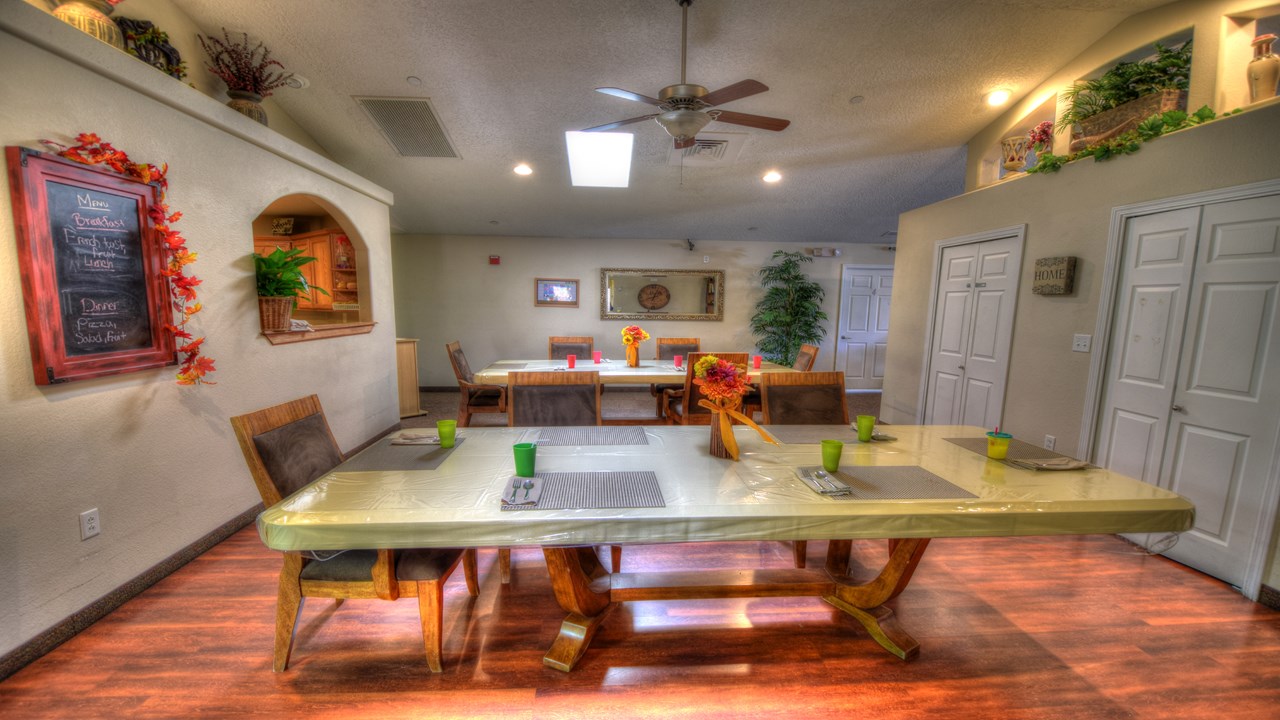
BeeHive Assisted Living Homes of Rio Rancho NM #1 - Dementia Care & Memory Care provides a home-like residential environment
BeeHive Assisted Living Homes of Rio Rancho NM #1 - Dementia Care & Memory Care creates customized care plans as residents’ needs change
BeeHive Assisted Living Homes of Rio Rancho NM #1 - Dementia Care & Memory Care assesses individual resident care needs
BeeHive Assisted Living Homes of Rio Rancho NM #1 - Dementia Care & Memory Care accepts private pay and long-term care insurance
BeeHive Assisted Living Homes of Rio Rancho NM #1 - Dementia Care & Memory Care assists qualified veterans with Aid and Attendance benefits
BeeHive Assisted Living Homes of Rio Rancho NM #1 - Dementia Care & Memory Care encourages meaningful resident-to-staff relationships
BeeHive Assisted Living Homes of Rio Rancho NM #1 - Dementia Care & Memory Care delivers compassionate, attentive senior care focused on dignity and comfort
BeeHive Assisted Living Homes of Rio Rancho NM #1 - Dementia Care & Memory Care has a phone number of (505) 221-6400
BeeHive Assisted Living Homes of Rio Rancho NM #1 - Dementia Care & Memory Care has an address of 204 Silent Spring Rd NE, Rio Rancho, NM 87124
BeeHive Assisted Living Homes of Rio Rancho NM #1 - Dementia Care & Memory Care has a website https://beehivehomes.com/locations/rio-rancho/
BeeHive Assisted Living Homes of Rio Rancho NM #1 - Dementia Care & Memory Care has Google Maps listing https://maps.app.goo.gl/FhSFajkWCGmtFcR77
BeeHive Assisted Living Homes of Rio Rancho NM #1 - Dementia Care & Memory Care has Facebook page https://www.facebook.com/BeeHiveHomesRioRancho
BeeHive Assisted Living Homes of Rio Rancho NM #1 - Dementia Care & Memory Care has a YouTube Channel at https://www.youtube.com/@WelcomeHomeBeeHiveHomes
BeeHive Assisted Living Homes of Rio Rancho NM #1 - Dementia Care & Memory Care won Top Memory Care Homes 2025
BeeHive Assisted Living Homes of Rio Rancho NM #1 - Dementia Care & Memory Care earned Best Customer Service Award 2024
BeeHive Assisted Living Homes of Rio Rancho NM #1 - Dementia Care & Memory Care placed 1st for Assisted Living Communities 2025
People Also Ask about BeeHive Assisted Living Homes of Rio Rancho NM #1 - Dementia Care & Memory Care
What is BeeHive Homes of Rio Rancho Living monthly room rate?
The rate depends on the level of care that is needed (see Pricing Guide above). We do a pre-admission evaluation for each resident to determine the level of care needed. The monthly rate is based on this evaluation. There are no hidden costs or fees
Can residents stay in BeeHive Homes of Rio Rancho until the end of their life?
Usually yes. There are exceptions, such as when there are safety issues with the resident, or they need 24 hour skilled nursing services
Does BeeHive Homes of Rio Rancho have a nurse on staff?
No, but each BeeHive Home has a consulting Nurse available 24 – 7. if nursing services are needed, a doctor can order home health to come into the home
What are BeeHive Homes of Rio Rancho visiting hours?
Visiting hours are adjusted to accommodate the families and the resident’s needs… just not too early or too late
Do we have couple’s rooms available?
Yes, each home has rooms designed to accommodate couples. Please ask about the availability of these rooms
Where is BeeHive Homes of Rio Rancho located?
BeeHive Homes of Rio Rancho is conveniently located at 204 Silent Spring Rd NE, Rio Rancho, NM 87124. You can easily find directions on Google Maps or call at (505) 221-6400 Monday through Friday 9:00am to 5:00pm
How can I contact BeeHive Homes of Rio Rancho?
You can contact BeeHive Assisted Living Homes of Rio Rancho NM #1 - Dementia Care & Memory Care by phone at: (505) 221-6400, visit their website at https://beehivehomes.com/locations/rio-rancho, or connect on social media via Facebook or YouTube
Visiting the Haynes Community Center and Park provides a quiet neighborhood setting where seniors in assisted living and memory care can relax outdoors during senior care and respite care visits.